Dr. W. Andre Walker: Public Health as a ‘Platform for Justice’
Written by: North Carolina Central University • Dec 5, 2025
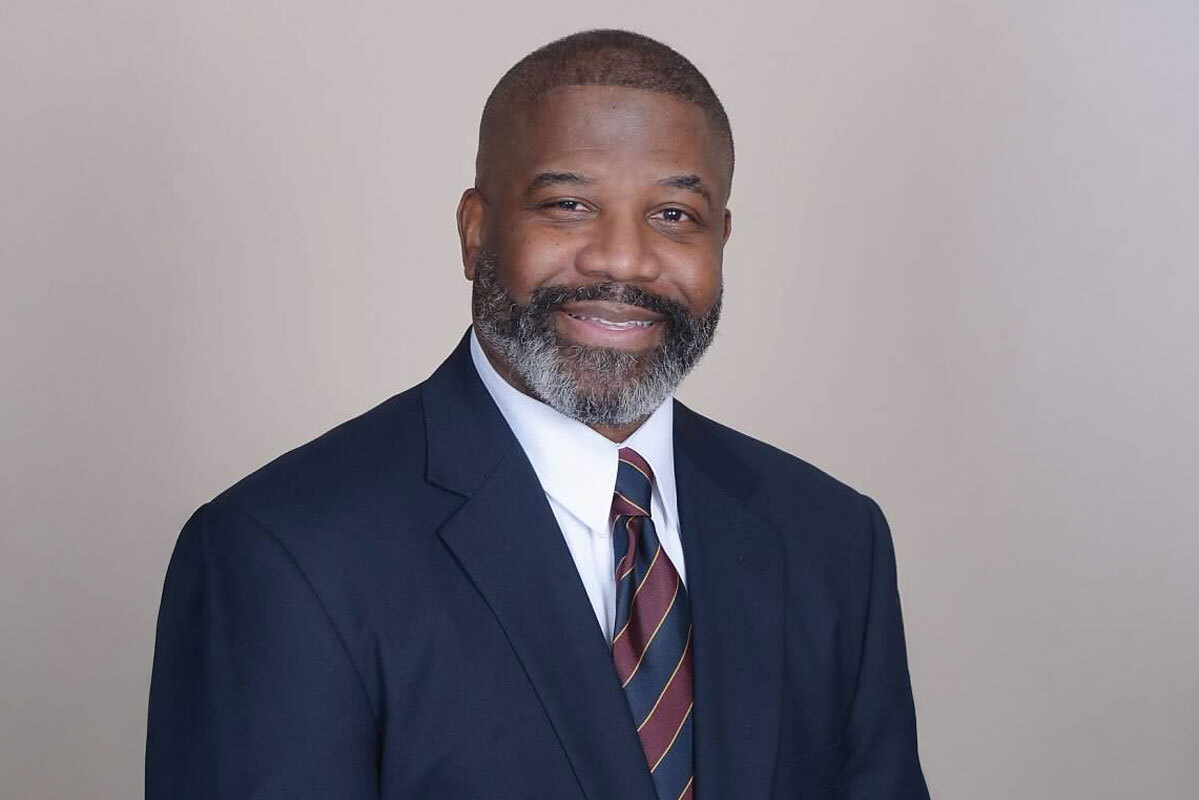
On an early Saturday morning outside a dental clinic in Columbia, South Carolina, a line of patients queued up outside. They’d come from across the state, many from rural areas where dentists are scarce and preventive care is often a luxury. A clinic worker came out and separated people based on need: extractions on the left; other dental concerns on the right.
Origins of a Calling
W. Andre Walker, PhD, was there that morning with a relative who needed dentures. Standing there among the crowd, he recognized a pattern he’d first begun to notice growing up in Hartford, Connecticut: when health care is scarce, the people with the most pressing health concerns are often underserved by the system.
Dr. Walker’s commitment to public health traces back to his childhood in Chester A. Bowles Park, a public housing complex in Hartford. Raised by a single mother after the passing of their father at an early age, Dr. Walker and his two siblings experienced the instability of an under-resourced neighborhood.
He also witnessed the systemic failures that thread the health care system: a dearth of providers in rural areas, where care was often needed most, and economically vulnerable people forced to seek routine care in emergency rooms, only to be deprioritized because they lacked health insurance.
“That’s how my interest in public health was shaped,” Dr. Walker says. “That environment shaped my commitment to community-driven solutions. Health promotion and education became my focus because I believe informed communities are empowered communities. Education is not just a tool — it’s a catalyst for generational change.”
Academic Inquiry With Real-World Impact
That Saturday outside the dental clinic wasn’t just an anecdote for Dr. Walker — it became the foundation for his data-driven approach to public health policy. The experience informed his graduate school dissertation at the University of South Carolina. Using national emergency department databases, Dr. Walker mapped how working-age adults without access to dental care flood emergency departments (EDs) with treatable conditions.
From Research to Reform
Inspired by Dr. Walker’s research, leaders within the South Carolina Department of Health and Human Services (SCDHHS) used it as a jumping-off point for policy development, ultimately adopting it as a template to craft the state’s Adult Preventive Dental Care Benefits Program.
“It was deeply affirming — not just professionally, but personally,” Dr. Walker says. “That project validated the power of applied research to drive policy change. Seeing my work influence a statewide benefits program was a reminder that academic inquiry can and should have real-world impact.”
Building Trust in Public Health
For Dr. Walker, public health is more than a profession; it’s a “platform for justice.” He frames improving access to care, boosting health literacy, and eliminating disparities not only as logistical issues or policy puzzles but also as moral and ethical imperatives: “It’s a public health necessity.”
He’s blunt about some of the forces that impede access and contribute to disparities, namely, the mistrust certain communities have toward the medical establishment and overall health care system. He points to the legacy of the Tuskegee experiment and the book “Medical Apartheid: The Dark History of Medical Experimentation on Black Americans from Colonial Times to the Present” as evidence of a long history of exploitation. That history, he argues, isn’t an obstacle to be ignored; it’s a starting point for honest conversation.
“[Those experiences have] built this history of mistrust,” Dr. Walker says. “And the way to break that down is to say, ‘Yeah, the history’s here … This is what happened. But this is what we have to do to do better.’”
This mindset shapes his approach to teaching and preparing the next generation of public health stewards. He encourages his students to “always be curious, always be transparent, find the data. That way, when you’re talking to the population, trying to educate them, the respect is there, the representation and accountability.
“If they feel you’re being transparent, that’s the starting point — and that keeps the trust.”
A Career Centered on Service
Public service is a through line in Dr. Walker’s professional life, a sustained focus on helping others. From his early years as a U.S. Navy corpsman, to his time as a substance abuse counselor and clinical researcher, to his work engaging father figures and supporting Head Start programs and community partners through the consulting business he runs with his wife, Dr. Walker has always put service and mentorship at the center of his life.
Teaching as Advocacy
His commitment to these values extends to Dr. Walker’s teaching career as well, where he views himself as a mentor and role model.
“I use the term ‘throw a rope back,’” he says. “I’m going to make sure that I support someone else, or throw a rope back and lift them up. So I lift as I climb. I think that’s something that everybody owes themselves to do, to always look out for others and serve others.”
Dr. Walker’s students in the public health education bachelor’s program at NCCU Online — many of them working adults juggling jobs and personal commitments — benefit from his practical, empathetic pedagogy: icebreaker activities, extensions when illness strikes, and one-on-one check-ins.
“I like to meet [students] where they are,” he says. “I’m here to help. And I need you to help me help you.”
Technical rigor and cultural responsiveness sit side by side in his teaching: find the data, learn the history, and build programs that earn community trust. At NCCU Online, Dr. Walker brings those principles to a student-centered, community-engaged program that prepares future public health professionals.
Public Health as Justice
As both an educator and a practitioner, Dr. Walker hopes to inspire the next generation of public health leaders to see their work the same way he does — as more than a profession but as a calling: “To me, public health is a platform for justice — a call to action that demands we move beyond awareness to accountability. It’s where we turn data into dignity, and policy into possibility. Whether I’m in the classroom or consulting with community partners, I center this principle to ensure our work uplifts those historically marginalized and builds systems that reflect their voices.”
“I envision a public health workforce that leads with empathy, builds trust through transparency, and centers lived experience as expertise,” he says. “My role is to help shape that future — one student, one policy, one community at a time.”
Become a Public Health Steward
If you yearn to make an impact in public health, the Bachelor of Science in Public Health Education at NCCU Online can help you build the foundational skills to enter this vital field. Our fully online program emphasizes service and community engagement, taught by experienced faculty such as Dr. Walker, who are committed to your academic and professional growth.
Discover how NCCU Online can give you the tools to build healthier communities.
Recommended Readings
5 Health Promotion Careers for Public Health Graduates
Why Is Health Education Important?
Population Health vs. Public Health: Differences and Similarities
Sources:
Centers for Disease Control and Prevention, About the Untreated Syphilis Study at Tuskegee