What Does a Pediatric Nurse Do?
Written by: North Carolina Central University • Feb 1, 2024
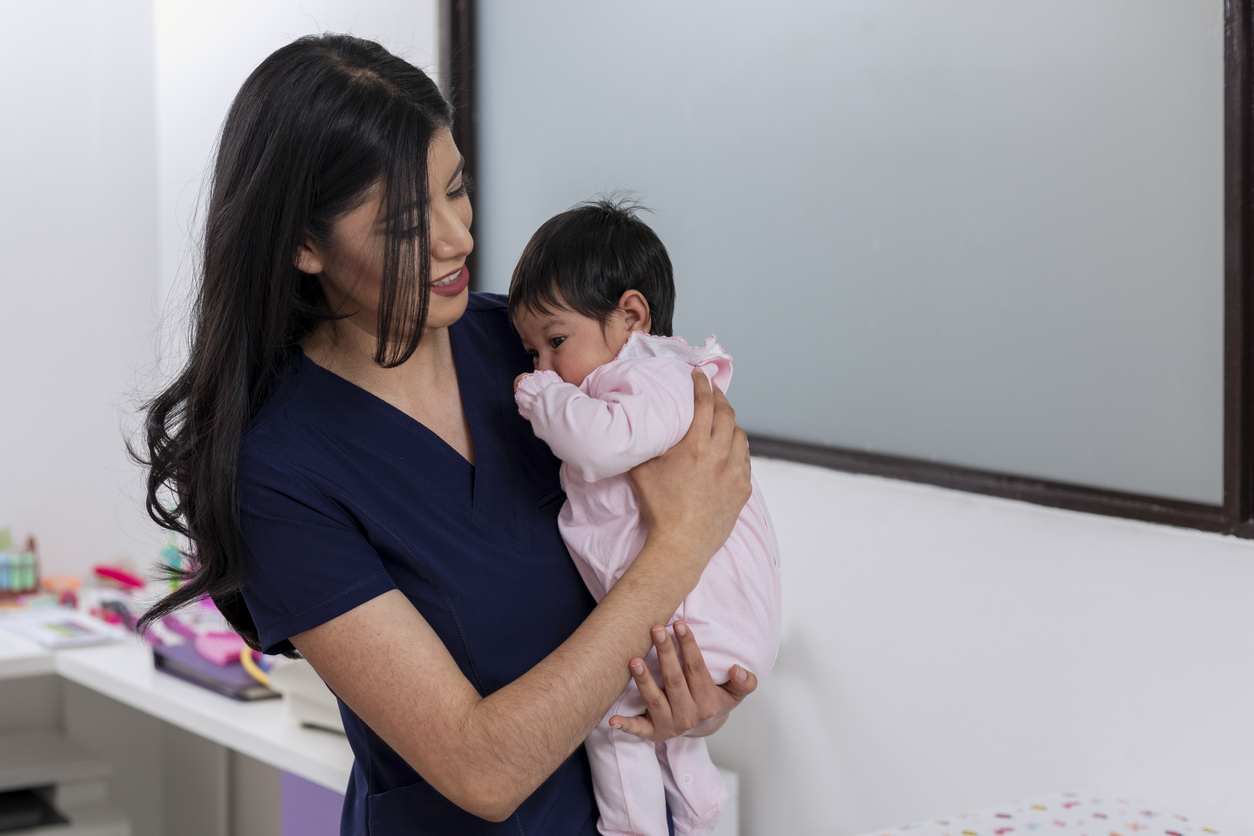
Delivering health care services to children requires advanced clinical skills, compassion, and an attentive eye that can pick up on subtle nuances that others may overlook. Pediatric nurses are health care professionals who specialize in the treatment of infants, toddlers, adolescents, and teenagers. In addition to delivering essential vaccines and other forms of preventive care, pediatric nurses address a range of acute and chronic health issues, some of which are specific to younger demographics.
Those interested in this dynamic role should know what pediatric nurses do and how to pursue a career in pediatric nursing, including choosing the right nursing degree program to advance their careers.
Pediatric Nurse Duties and Responsibilities
Like other registered nurses (RNs), pediatric nurses work in a broad range of environments, including hospitals, private practices, urgent care centers, schools, and health care clinics. The main difference between a standard RN and a pediatric nurse is that RNs typically treat patients of all ages, while pediatric nurses only treat patients from infancy to adolescence.
During a typical day, a pediatric nurse may perform the following duties:
-
Conducting examinations of patients and updating their medical histories
-
Administering vaccines and medications
-
Ordering diagnostic tests, such as blood work or X-rays
-
Monitoring patients for changes in their vital signs and responses to treatments
-
Educating patients and their families about relevant health care topics
-
Collaborating with physicians and other health care workers on treatment strategies
-
Serving as a source of emotional support for children and their parents
Qualities of a Pediatric Nurse
Considering their patient demographic, pediatric nurses must be in tune with how diseases and illnesses impact children differently from adults. They must be especially careful when administering medications, as young patients who are still developing have much lower tolerance thresholds.
Another distinction in pediatric nursing is its deep roots in forming relationships and bonds of trust with children and their families. An excellent bedside manner and the ability to connect with patients are essential qualities. Those with well-developed interpersonal soft skills are best equipped to work with young patients.
Common Pediatric Care Settings and Age Ranges
Pediatric nurses specialize in caring for children from infancy through adolescence, supporting both patients and their families at every stage of growth and development. The exact age ranges they serve can vary, but generally include newborns, infants, toddlers, children, and teenagers — from birth to age 18.
Pediatric nurses work in a wide variety of health care environments. Some of the most common settings include:
-
Hospitals and pediatric inpatient units, caring for children with acute or serious illnesses
-
Pediatric clinics and primary care offices, providing routine checkups, vaccinations, and preventive care
-
Neonatal intensive care units (NICUs), focusing on premature or critically ill newborns
-
Pediatric intensive care units (PICUs), treating children with complex or life-threatening conditions
-
School health offices, supporting students with chronic conditions or injuries
-
Specialty clinics, in fields such as cardiology, oncology, or endocrinology
In each of these settings, what pediatric nurses do depends on the child’s developmental stage, physical needs, and emotional well-being. They also play a key role in educating parents and caregivers, helping families understand treatments, manage care at home, and support healthy development.
4 Types of Pediatric Nurses
Pediatric nurse is an umbrella term for nursing professionals who specialize in working with children. However, there are different types of pediatric nurses, defined by health care environment, patient age, and conditions treated.
The following are the four types of pediatric nurses:
-
Pediatric RN (Direct Nursing Care): These pediatric nurses typically work in a hospital or doctor’s office. Pediatric RNs conduct routine checkups and deliver acute care as well as various other health care services. They are the broadest in scope in terms of what they treat and their patient demographic.
-
Palliative Pediatric Nurse: These nurses work exclusively with terminally ill children whose conditions cannot be cured. They offer comfort and support to patients and their families and enhance their patients’ quality of life as much as possible while providing end-of-life care.
-
Developmental Disability Nurse: These pediatric nurses work exclusively with young patients who have developmental or mental disabilities such as Asperger’s syndrome, autism, and Down syndrome.
-
Neonatal Nurse: These nurses provide specialized care to newborns, particularly those with birth defects, heart deformities, or infections. They also treat infants who were born prematurely.
How to Become a Pediatric Nurse
Aspiring pediatric nurses complete the same educational and developmental steps as generalist RNs. They must also complete specific benchmarks that are relevant to the specialty of pediatrics. To become pediatric nurses, individuals must do the following:
Complete Nursing Education
Complete either an associate or a bachelor’s nursing degree program from an accredited university. With the rising standard of nursing education, a Bachelor of Science in Nursing (BSN) is typically preferred to ensure that patients receive the highest level of care possible.
Pass the NCLEX-RN and Earn Licensure
Pass the National Council Licensure Examination for Registered Nurses (NCLEX-RN) and apply for licensure in the state of practice. Licensure is required to practice in a live health care environment. After earning licensure, RNs must meet their state’s continuing education requirements to continue practicing.
Accrue Nursing Experience
Earn nursing experience as an RN. Two or more years of working as a traditional RN establishes a foundation in health care and demonstrates the ability to perform standard clinical care duties in an active health care environment.
Transition to Pediatrics
Request an internal transfer to pediatrics, or secure a position as a pediatric nurse at a different health care facility. Building on their experience as RNs, nurses can officially begin learning how to become pediatric nurses in a live environment.
Earn Professional Certifications
Consider professional pediatric nursing certifications. The most recognized certifications include Certified Pediatric Nurse (CPN), Certified Pediatric Nurse Practitioner – Acute Care (CPNP-AC), Pediatric CCRN (CCRN-P), and Pediatric Primary Care Mental Health Specialist (PMHS). These certifications demonstrate that nurses possess specific skills and knowledge that have been confirmed via a formal exam.
In addition to expanding nurses’ scope of practice, professional certifications typically result in higher compensation when compared with the average RN salary . Earning certification is optional, but those who wish to reach the top of their field in pediatrics should explore it.
Pediatric Nurse Salary and Job Outlook
Pediatric nursing offers a rewarding career path that combines meaningful patient impact with long-term career stability. While salaries can vary based on location, experience, education levels, and work setting, pediatric nurses generally earn competitive wages comparable to other registered nursing specialties. The median annual salary for pediatric nurses was approximately $71,680 in December 2025, according to Payscale.
Nurses working in hospitals, pediatric specialty units, or metropolitan areas can earn higher salaries than those in smaller clinics or rural settings. Additional certifications, advanced degrees, and experience in high-acuity units such as the NICU or PICU can also increase earning potential over time.
Beyond salary, the job outlook for pediatric nurses remains very strong. Demand for RNs continues to grow nationwide, driven by population growth, expanded access to health care, and the ongoing need to replace retiring nurses. The U.S. Bureau of Labor Statistics reports that RNs, including pediatric nurses, will experience a 5% job growth between 2024 and 2034, which equates to around 189,100 openings each year on average.
Launch Your Career Path in Pediatric Nursing
What pediatric nurses do requires both clinical skill and compassion. Treating children combines a caring demeanor, specialized training, and extensive knowledge of conditions that are specific to younger demographics. The work is challenging but also highly rewarding, with plenty of opportunities for advancement.
If you’re ready to commit to a career in pediatrics, the journey begins with the right education. The online RN to BSN program at NCCU Online is designed for active nurses who are ready to take their careers to a new level. Our accredited program features coursework that covers:
-
Nursing Informatics
-
Health Assessment for RNs
-
Special Health Care Problems for RNs
-
Leadership and Management for RNs
-
Community Health for RNs
Learn more about the program and find out how NCCU Online can help you get there.
Recommended Readings
Nursing Career Path Steps: How to Advance From ADN to MSN (and Beyond)
Dr. Yolanda VanRiel: A Nurse Educator’s Journey of Purpose, Practice, and Pride
Sources:
Indeed, “How to Become a Pediatric Nurse (Plus Duties and FAQs)”
Indeed, Pediatric Nurse Job Description: Top Duties and Qualifications
National Association of Neonatal Nurses, What Is Neonatal Nursing?
Payscale, Average Pediatric Nurse Hourly Pay